Portfolio
Playground
Contact
StyleMate
02.
03.
Background & Context
Connection > Consumption
Connection > Consumption
The Ideation Process!
The Ideation Process!
Solution
03.
02.
01.
01.
Simplicity is persuasive. Creative solutions can still be possible with simple, scalable designs.
Conversational UX matters. The AI's tone directly shapes user trust and satisfaction.
Designing for sustainability is designing for emotion. People keep what they feel connected to.
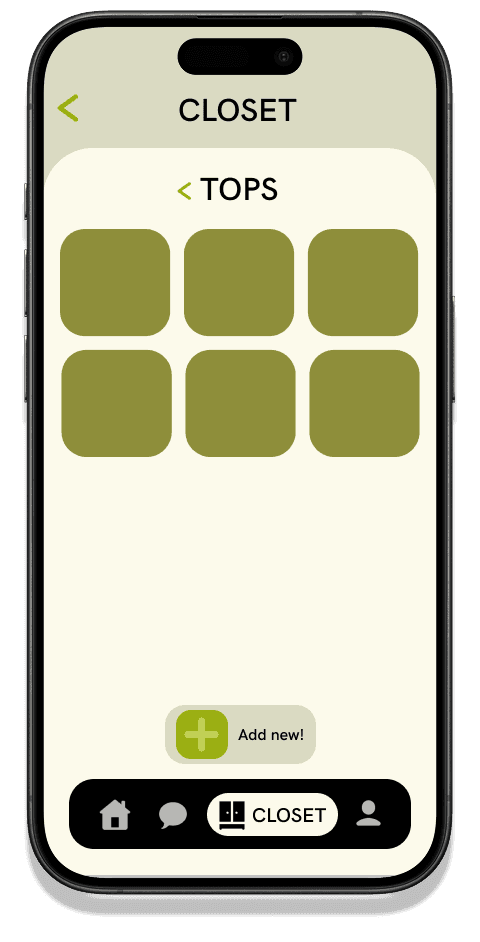
Users can upload images of their garments, automatically categorized and sorted by Gemini's computer vision.
01.
01.
Usability Testing
Takeaways
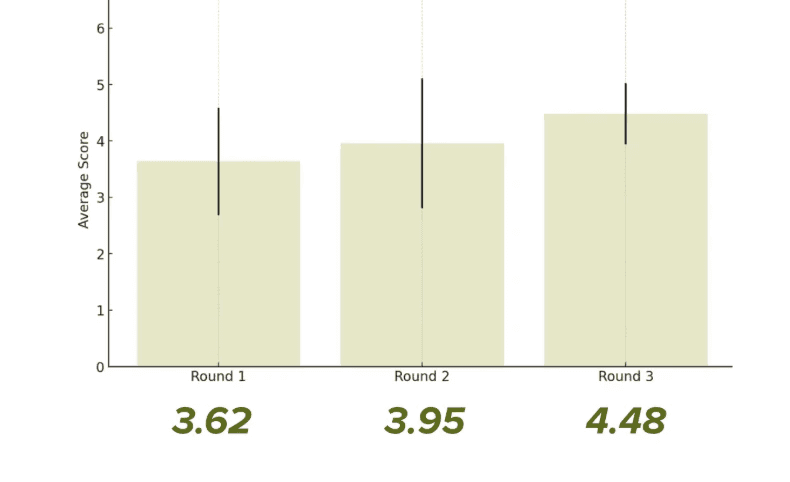
Average Usability Score
User Insights
How might we help users develop a personal, lasting relationship with their clothes—using AI and UX to make sustainability intuitive?
How might we help users develop a personal, lasting relationship with their clothes—using AI and UX to make sustainability intuitive?
Timeline
Role
Skills
Designing AI-driven wardrobe assistant & feedback loops that turns fast fashion habits into sustainable style routines
Designing AI-driven wardrobe assistant & feedback loops that turns fast fashion habits into sustainable style routines
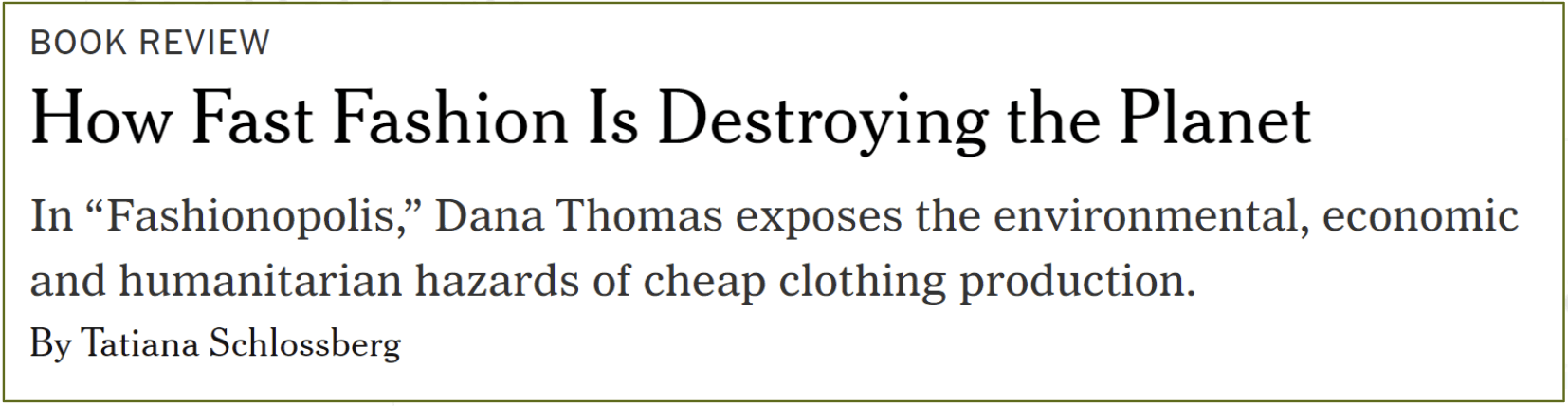
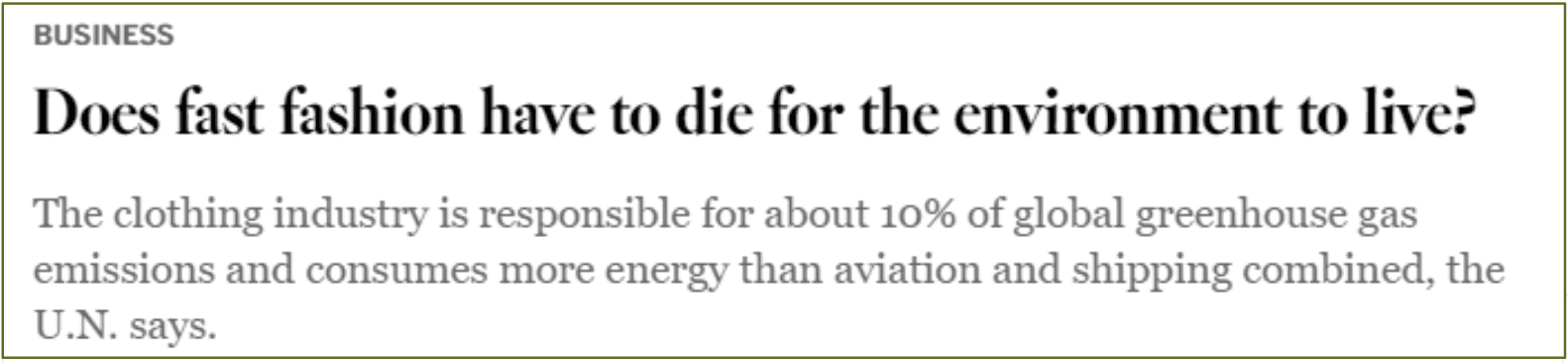
The rise of fast fashion has turned self-expression into overconsumption. People are buying 60% more clothing than they did two decades ago, only to keep them for half as long.
I joined UCSB’s Research Mentorship Program wanting to explore where AI and UX could shift that behavior and reimagine how design could orient behavior towards wanting less to consume less.
Trend-driven systems: Most apps push new products instead of encouraging users to rewear what they own.
The experience of sustainable shopping is rewarding, but it’s hard to know what’s worth keeping, what fits your style, or how to even start building a wardrobe that lasts. I wanted to design something that made that process feel good, not guilt-driven.
The experience of sustainable shopping is rewarding, but it’s hard to know what’s worth keeping, what fits your style, or how to even start building a wardrobe that lasts. I wanted to design something that made that process feel good, not guilt-driven.
My big picture question was:
Cognitive overload: Managing your wardrobe, finding outfits, and tracking purchases all live in separate, disjointed tools.
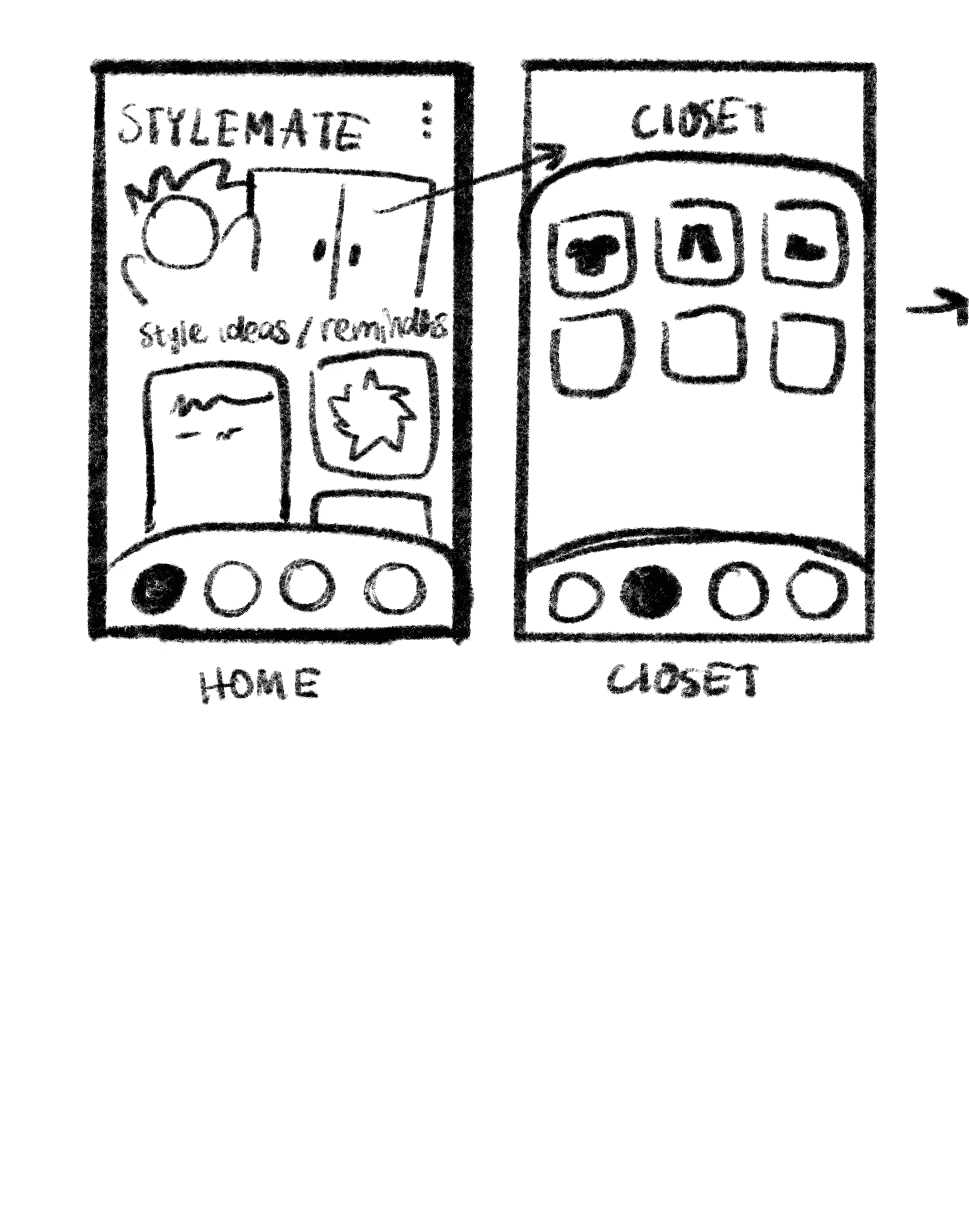
Using the painpoints gathered, I sketched early flows focused on reconnection — how users could rediscover what they already owned.
I built StyleMate’s high-fidelity prototype in Figma, later connected to Gemini’s multimodal API.
I conducted three rounds of usability testing with 12 participants to refine both flow and tone. Metrics measured: task success, error rate, and perceived helpfulness.
Users preferred when the AI asked clarifying questions before suggesting outfits.
A “Favorites” section increased attachment to clothing items.
Participants who self-identified as “not fashion-savvy” rated the app most helpful — average usability score of 4.48 / 5 after revisions.
June 2024 -August 2024
June 2024 -August 2024
UX Researcher & Sole Prototyper
UX Researcher & Sole Prototyper
Flutter
Gemini API
Python
Figma
UX Research
Flutter
Gemini API
Python
Figma
UX Research
The rise of fast fashion has turned self-expression into overconsumption. People are buying 60% more clothing than they did two decades ago, only to keep them for half as long.
I joined UCSB’s Research Mentorship Program wanting to explore where AI and UX could shift that behavior and reimagine how design could orient behavior towards wanting less to consume less.
Background & Context

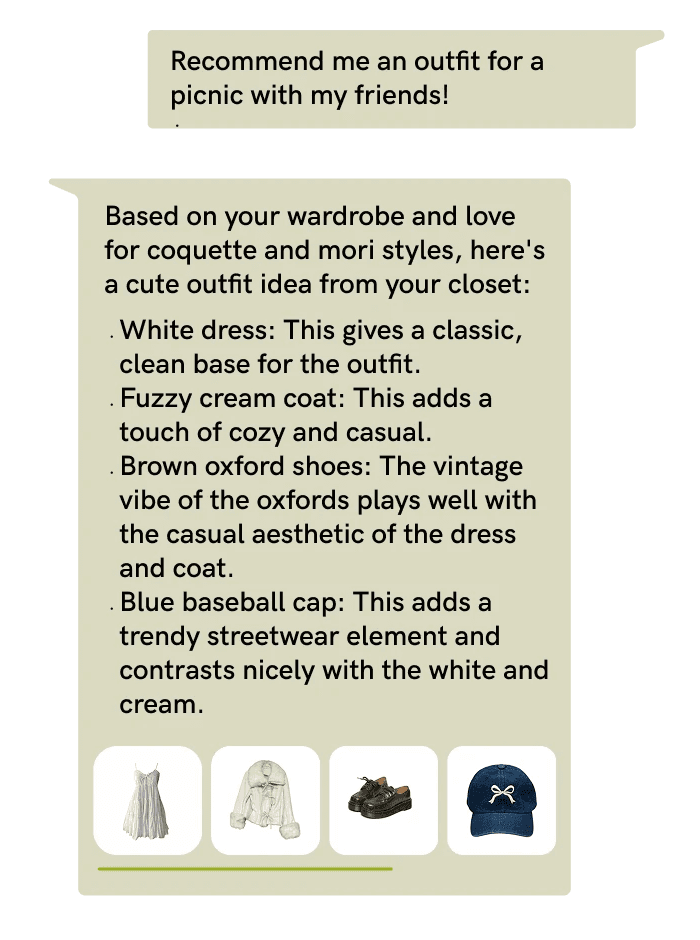
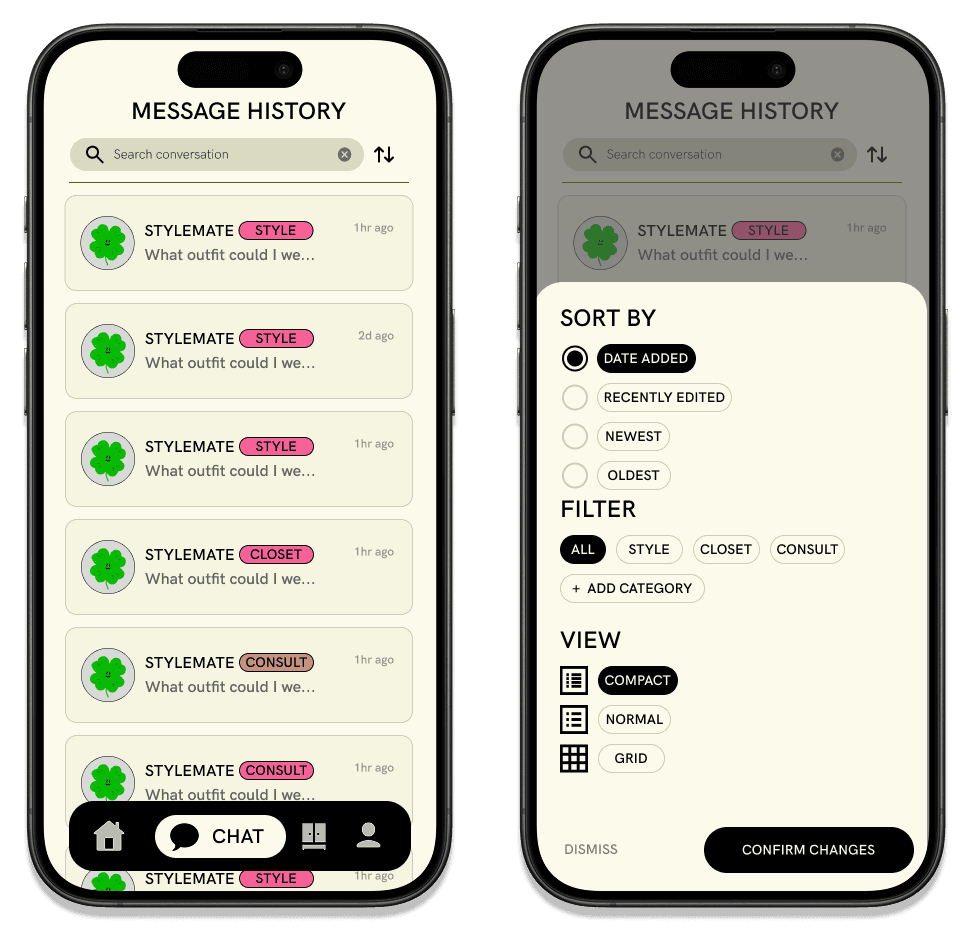
Users can chat with a personal stylist who
focuses on REUSING and building attachments to
existing garments based on closet uploaded by user + revisit past conversations
02.
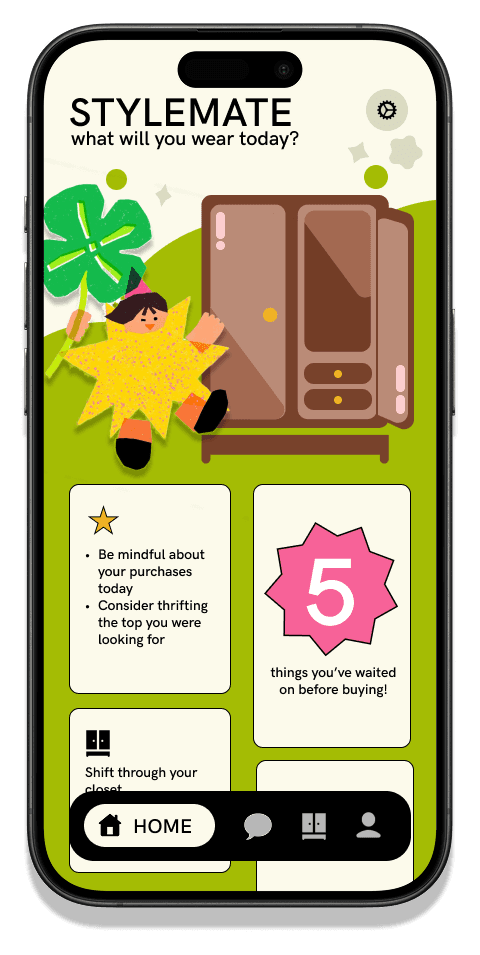
After making an account, homepage is adjusted to
your shopping preferences, adapting to your
overconsumption tendencies with reminders and
positive reinforcement.
PAIN POINTS:
03.
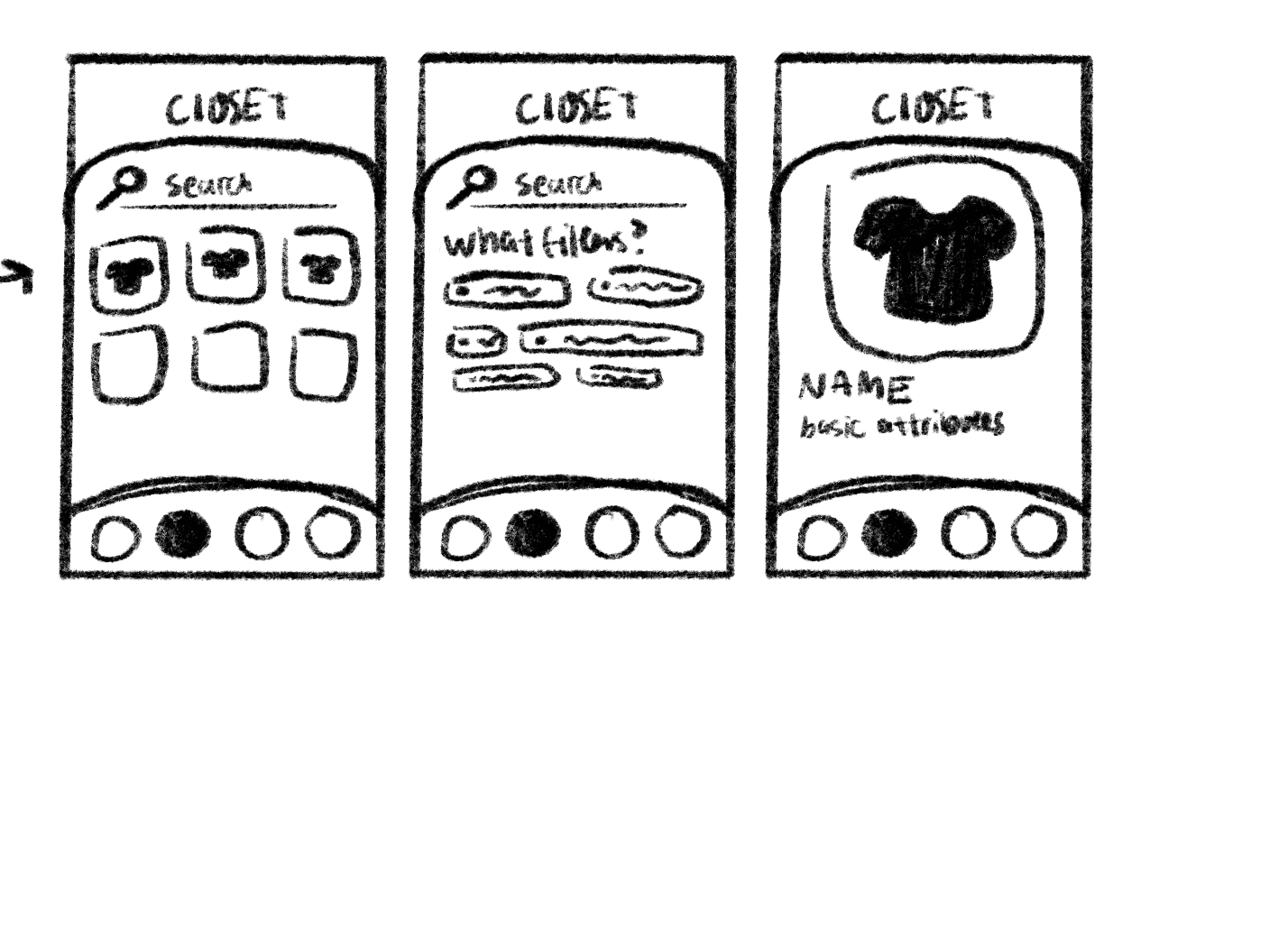
Using the painpoints gathered, I sketched early flows focused on reconnection — how users could rediscover what they already owned.
Sketched low-fidelity wireframes to explore flows for digital wardrobe upload, AI outfit recommendations, and style onboarding.
Sketched low-fidelity wireframes to explore flows for digital wardrobe upload, AI outfit recommendations, and style onboarding.
Prompt-engineered interactions around a chat-based stylist, emphasizing quick, conversational feedback loops
After making an account, homepage is adjusted to
your shopping preferences, adapting to your
overconsumption tendencies with reminders and
positive reinforcement.
Users preferred when the AI asked clarifying questions before suggesting outfits
A “Favorites” section increased attachment to clothing items.
Participants who self-identified as “not fashion-savvy” rated the app most helpful; average usability score of 4.48 / 5 after revisions
Simplicity is persuasive. Creative solutions can still be possible with simple, scalable designs.
Conversational UX matters. The AI's tone directly shapes user trust and satisfaction.
Designing for sustainability is designing for emotion. People keep what they feel connected to.
Prompt-engineered interactions around a chat-based stylist, emphasizing quick, conversational feedback loops
I conducted three rounds of usability testing with 12 participants to refine both flow and tone. Metrics measured: task success, error rate, and perceived helpfulness.
Lack of personalization: Existing systems often miss personal context like users’ motivations for shopping.
Lack of personalization: Existing systems often miss personal context like users’ motivations for shopping.
StyleMate ui/ux research
Designing AI-driven wardrobe assistant & feedback loops that turns fast fashion habits into sustainable style routines
Timeline
Role
Skills
June 2024 -August 2024
UX Researcher & Sole Prototyper
Flutter
Gemini API
Python
Figma
UX Research
The rise of fast fashion has turned self-expression into overconsumption. People are buying 60% more clothing than they did two decades ago, only to keep them for half as long.
I joined UCSB’s Research Mentorship Program wanting to explore where AI and UX could shift that behavior and reimagine how design could orient behavior towards wanting less to consume less.
Background & Context
Connection > Consumption
The experience of sustainable shopping is rewarding, but it’s hard to know what’s worth keeping, what fits your style, or how to even start building a wardrobe that lasts. I wanted to design something that made that process feel good, not guilt-driven.
Cognitive overload: Managing your wardrobe, finding outfits, and tracking purchases all live in separate, disjointed tools.
Lack of personalization: Existing recommendation systems often miss personal context — users’ values, cultural preferences, or motivations for shopping.
PAIN POINTS:
How might we help users develop a personal, lasting relationship with their clothes—using AI and UX to make sustainability intuitive?
My big picture question was:
The Ideation Process!
Using the painpoints gathered, I sketched early flows focused on reconnection — how users could rediscover what they already owned.
Sketched low-fidelity wireframes to explore flows for digital wardrobe upload, AI outfit recommendations, and style onboarding.
Prompt-engineered interactions around a chat-based stylist, emphasizing quick, conversational feedback loops
Solution
01.
After making an account, homepage is adjusted to
your shopping preferences, adapting to your
overconsumption tendencies with reminders and
positive reinforcement.
02.
Users can chat with a personal stylist who
focuses on REUSING and building attachments to existing garments based on closet uploaded by user + revisit past conversations
Users can upload images of their garments, automatically categorized and sorted by Gemini's computer vision.
03.
Average Usability Score
I conducted three rounds of usability testing with 12 participants to refine both flow and tone. Metrics measured: task success, error rate, and perceived helpfulness.
Users preferred when the AI asked clarifying questions before suggesting outfits
A “Favorites” section increased attachment to clothing items.
Participants who self-identified as “not fashion-savvy” rated the app most helpful; average usability score of 4.48 / 5 after revisions
User Insights
03.
02.
01.
Takeaways
Simplicity is persuasive. Creative solutions can still be possible with simple, scalable designs.
Conversational UX matters. The AI's tone directly shapes user trust and satisfaction.
Designing for sustainability is designing for emotion. People keep what they feel connected to.
I built StyleMate’s high-fidelity prototype in Figma, later connected to Gemini’s multimodal API.